

The local context
The site covers just over 230 ha and the altitude varies from sea level to 100 m at the highest points of the cirque. As the phenomenon of micro-endemicity is possible in Madagascar (endemic to a very small area, sometimes just a few hundred hectares), this small dry forest could well hold some surprises in store for future inventory missions. Especially as, until now, it has only been the subject of a few naturalist surveys.
Project objectives
Protection of the relict forest.
Restoration of certain degraded areas.
Development of sustainable tourism.
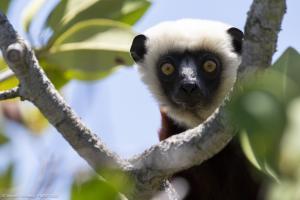
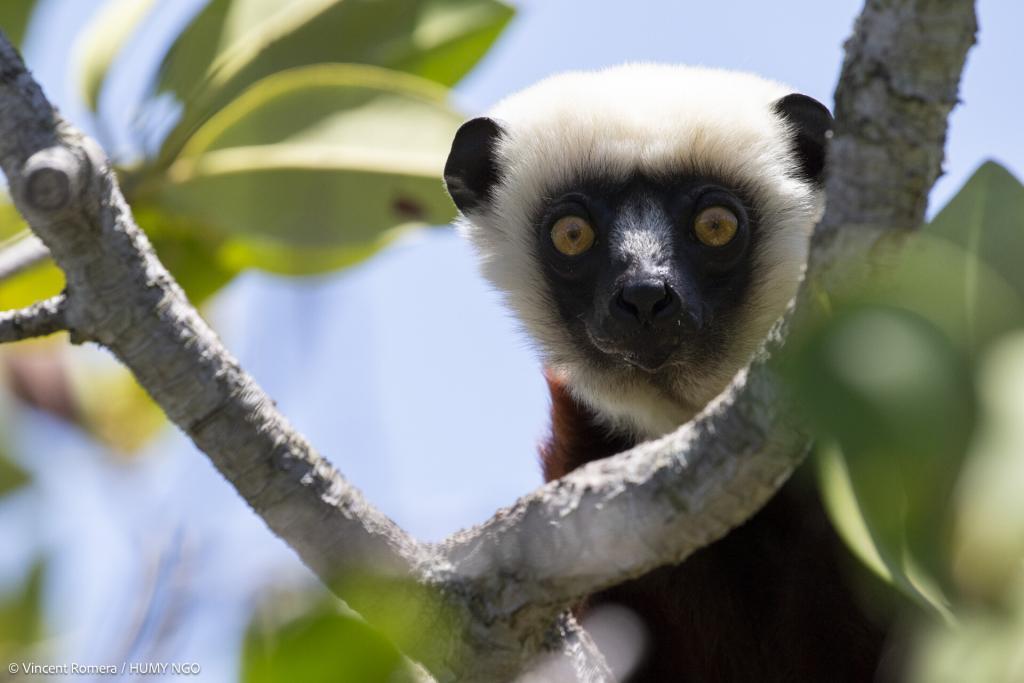
Coquerel's sifaka (Propithecus coquereli)
Issues
To date, the information available on the site's fauna indicates the presence of 9 mammal species (including 5 lemurs), 59 bird species and 6 reptile species; 9 of these species are assessed as threatened.
With regard to flora, a list of 232 species was reported, 9 of which are considered threatened.
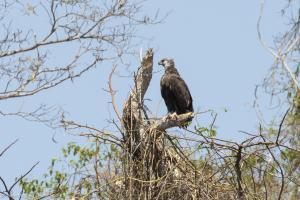
The flagship species present at Ambalakalanoro include two critically endangered species of lemur: Coquerel's Sifaka (Propithecus coquereli) and the extremely rare mongoose lemur Eulemur mongoz. In terms of birdlife, the majestic and no less rare Madagascar eagle (Haliaeetus vociferoides), also assessed as critically endangered, is recorded on the site. Humblot's Heron (Ardea humbloti), a heron endemic to Madagascar's west coast, is also present and is assessed as endangered.
Already completed
Paying the salaries of 3 eco-guards/nurserymen.
Funding for nurseries.
Partial reforestation of a 20.6-hectare restoration plot.
Planting of 9,000 cashew trees
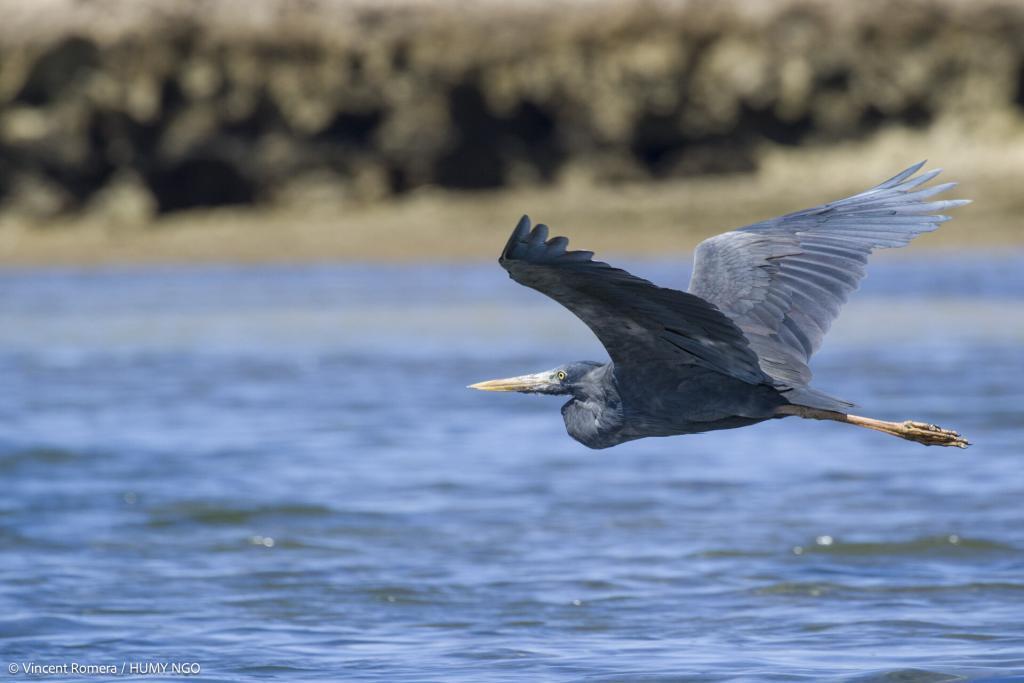
Humblot's heron (Ardea humbloti)
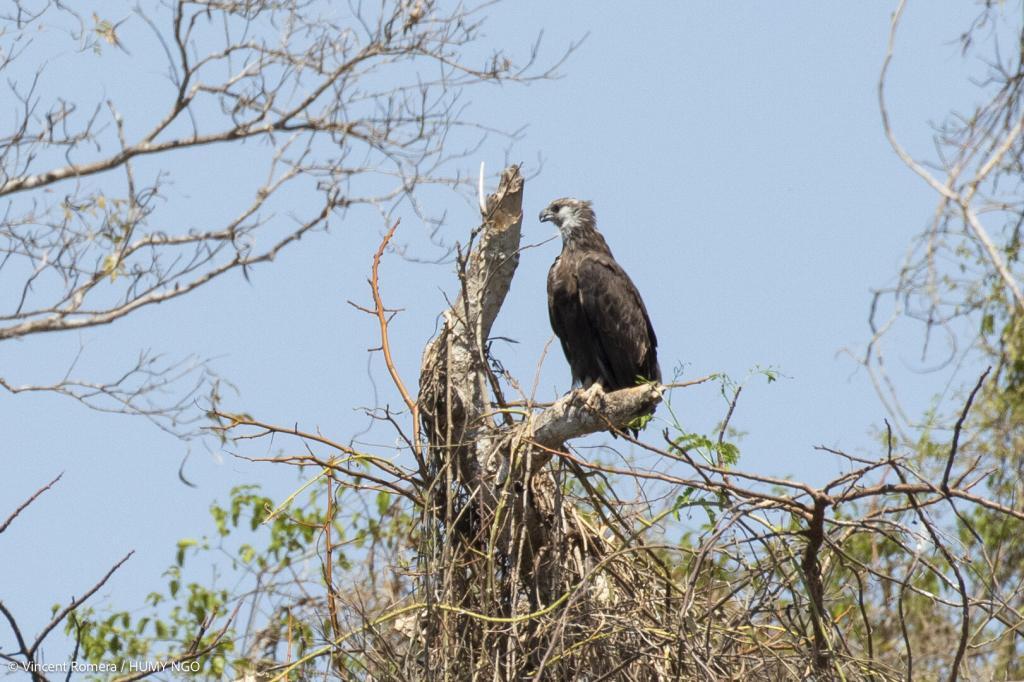
Madagascar eagle (Haliaeetus vociferoides)