

The local context
Hlanzoun is a swamp forest on peaty soil that is unique in West Africa due to certain tree species found there. It covers an area of 2,945 hectares, including a central core of almost 900 hectares in a relatively good state of conservation. This flooded forest is permanently fed by the river Hlan. 
However, Hlanzoun is a fragile ecosystem and is under threat from a variety of human pressures, including logging, illegal clearing, poaching and oil palm plantations.
Project objectives
Fund the training of beneficiaries by an experienced and recognised beekeeper, and then ensure that each beneficiary is monitored by the same trainer.
Equip beneficiaries with all the equipment they need to start up their new business.
All the honey produced will be purchased by our partner ECODEC, who will be responsible for marketing it.
Issues
Hlanzoun, as already explained, is a swamp forest. One of its special features is the presence of large numbers of trees of the genus Mitragyna. This is a small tree that grows in marshy areas and temporarily flooded land. The species is a pioneer, meaning that after a disturbance to the environment (or even its total destruction) it is one of the first trees to regrow, even in cultivated plots. Mitrgyna flowers produce a large nectar-bearing inflorescence with a particularly enchanting fragrance. You can smell the flowers from at least 200 m away!
This is a real boon for setting up beekeepers! Honey is an increasingly sought-after product in Benin, with high added value compared to other income-generating activities.
The development of a beekeeping industry should help to reduce human pressure on Hlanzoun.
What's more, the increase in the number of pollinators will have an impact on crop production (if no pesticides are used) and will also encourage the production of seeds from wild species. So it's an activity that really helps the forest!
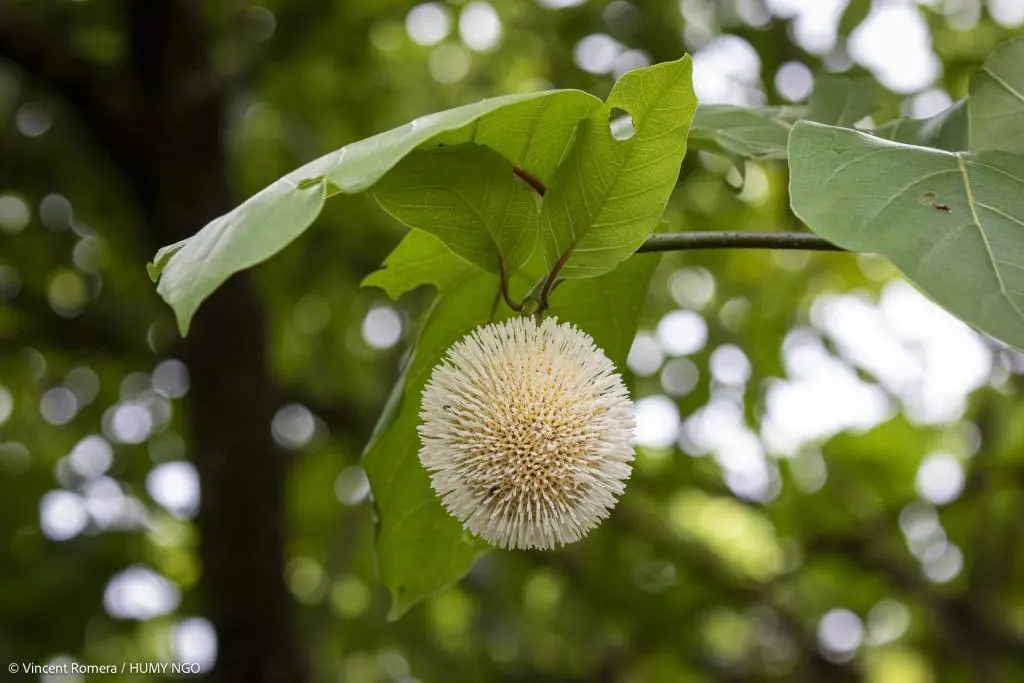
Inflorescence of Mitrgyna sp.
In progress...
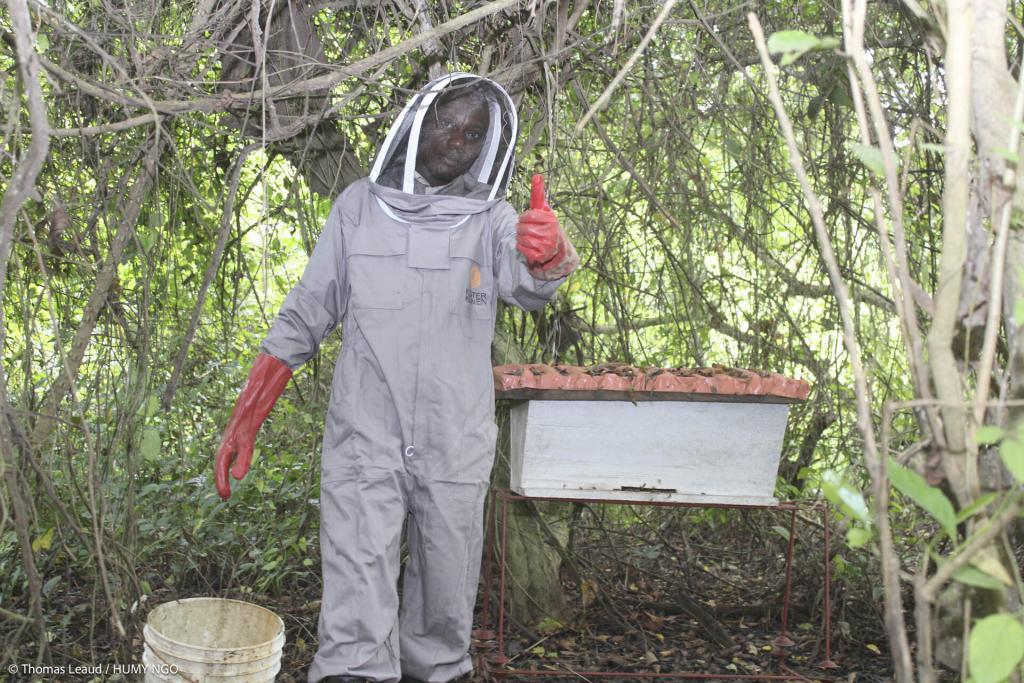
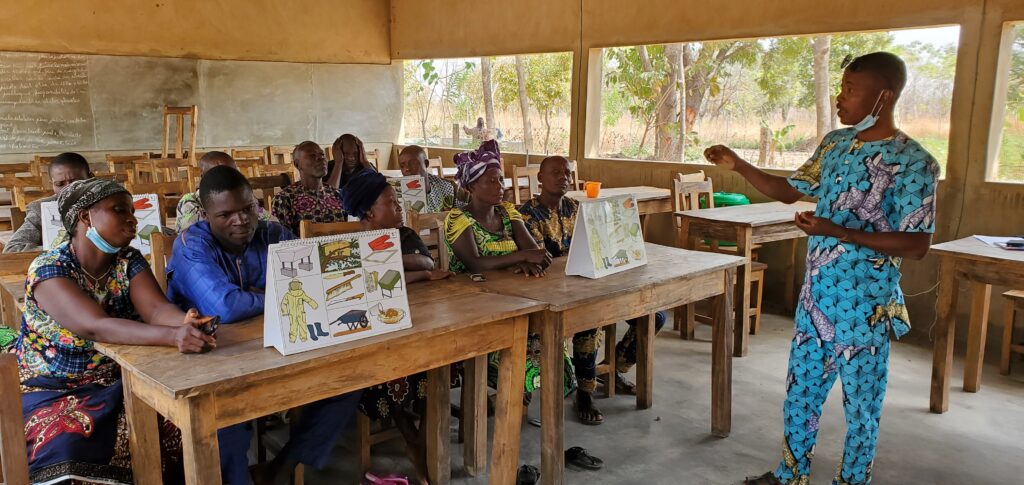
10 beekeepers were trained by Mr Codjo Camille Tooubi, a specialist trainer from CERFAT Bénin ONG (Centre de recherche et de formation en apiculture tropicale). They were then provided with all the equipment they needed to set up their apiaries and start up their new business. They are currently receiving technical support and supervision from CERFAT.
10 beekeepers are currently being recruited to increase the number of beneficiaries and develop this new beekeeping sector.