

The local context
The mountainous fringe just a few kilometres from the east coast is the last major forest corridor on the Grande Île, and is vital to the survival of thousands of species and to the country's climatic equilibrium. These reliefs and the forests that cover them generate their own climate and help to absorb the tropical storms (cyclones) that arrive from the Indian Ocean to the east.
Vohimana, with its incredible biodiversity, is also «a hotspot within a hotspot», in the sense that Madagascar, with its record levels of endemism and its many ecological particularities, is recognised worldwide as one of the planet's biodiversity hotspots. Within Madagascar itself, Vohimana stands out and surprises with the incredible biological diversity that is concentrated on this small piece of land!
Unfortunately, the very difficult living conditions of the local people mean that they are forced to clear the forests to produce charcoal and practise slash-and-burn agriculture (or Tavy). Against this backdrop, our partner «L'Homme et l'Environnement» has been working in the village of Ambavaniasy, and in particular on the Vohimana site, for almost 20 years.
Project objectives
To support the protection of this priceless natural heritage by providing assistance for infrastructure and services benefiting the local population (school, medical dispensary and related salaries).
Aid for reforestation of degraded areas.
Financial contribution to tourism infrastructure.
Development of a production chain for essential oils.

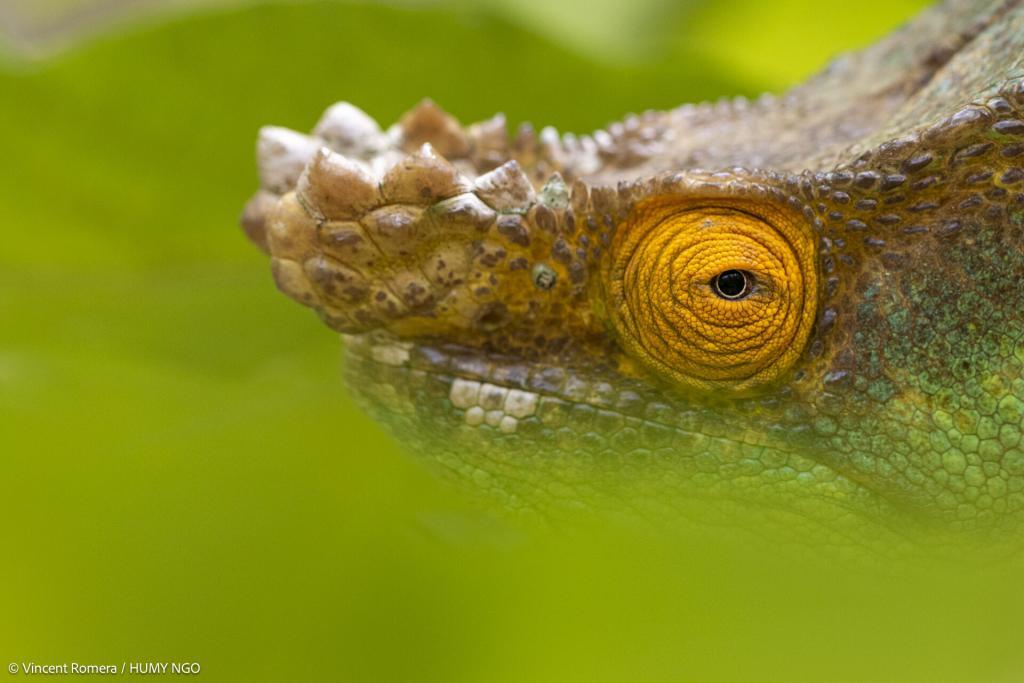
Parson's chameleon (Calumma parsonii) - adult male
Issues
The Vohimana experimental reserve covers almost 2,200 ha, including 500 ha of primary forest. An incredible biodiversity has been inventoried over this area, including 557 plant species, 105 bird species, 27 mammal species (including 12 lemurs), 51 reptile species (including 13 chameleons), 80 frog species (an incredible density of species!), etc.
Several animal species are endemic to Vohimana (or a restricted area including the site) and at least 41 are assessed by the IUCN as «near threatened» to «critically endangered». No fewer than 92 species of flora are threatened and 9 are near-threatened.
It is a site that can accommodate projects and teams of scientists with a dedicated station, facilitating access to primary forest areas. Sustainable tourism based on the observation of flora and fauna already exists and will be developed.
Already completed
Refurbishment of the school and medical dispensary.
Salaries: nurse, midwife, teacher.
Financing the planting of more than 60,000 native trees.
Co-financing of the distillery facilities
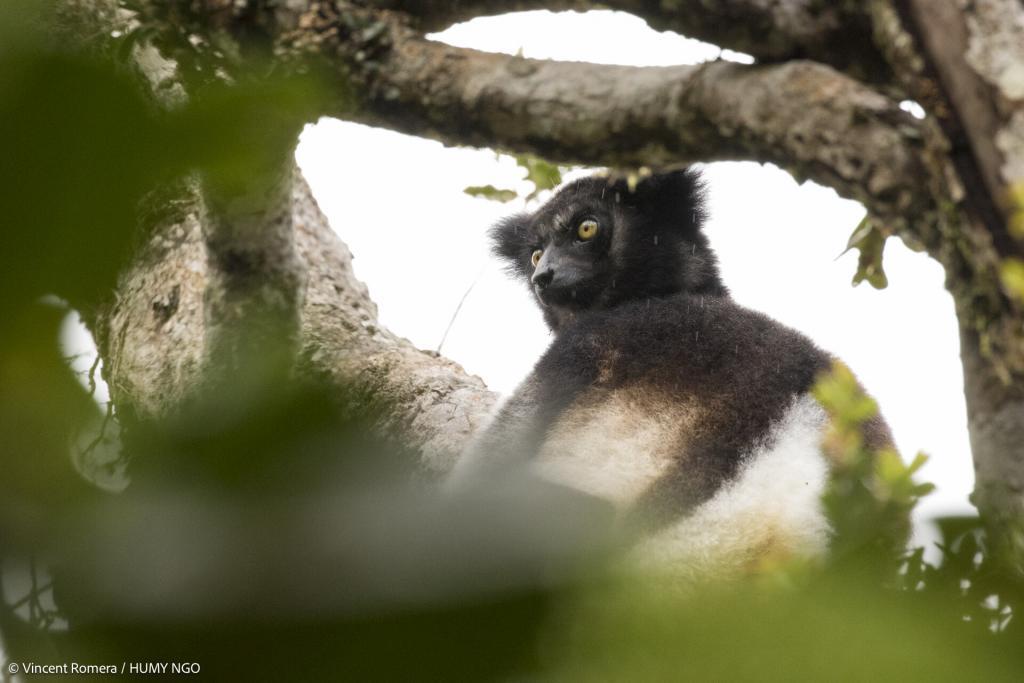
Indri (Indri indri)
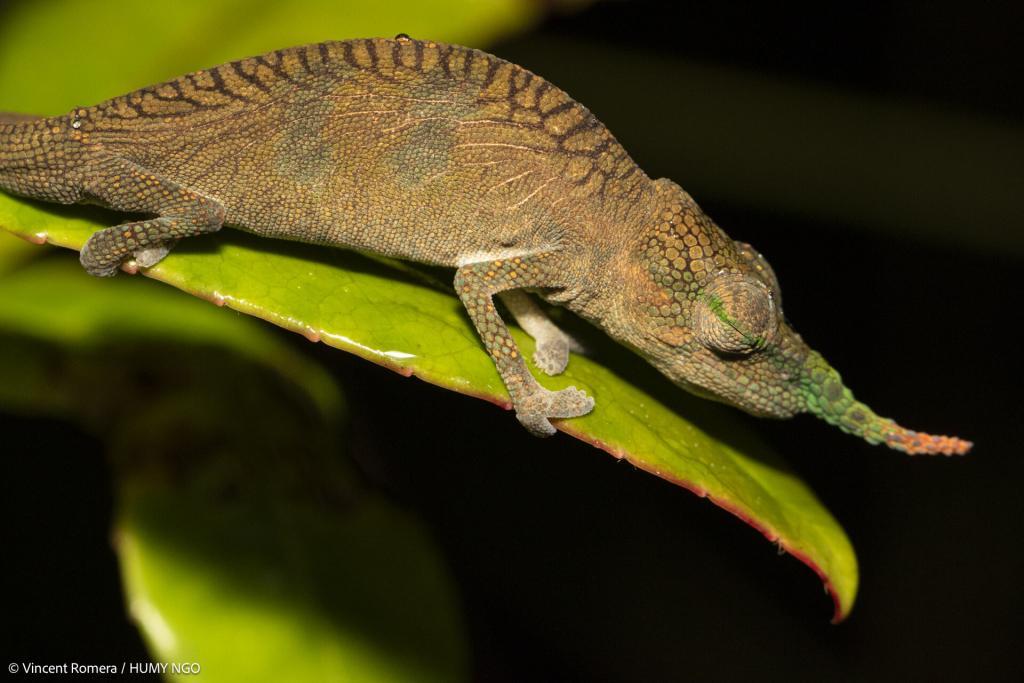
Pinocchio Chameleon (Calumma pinocchio) - adult male
More and more discoveries!
At the end of 2025 a new species of chameleon was scientifically described: Chameleon Pinocchio (Calumma pinocchio). Long classified in the Calumma gallus, morphometric and genetic studies of specimens from museum collections led to the distinction of two new species, including this Pinocchio.
It is endemic to the Vohimana forest and a few fragments of rainforest in the surrounding area. This is what is known as micro-endemicity: a species endemic to a very small area!