

The local context
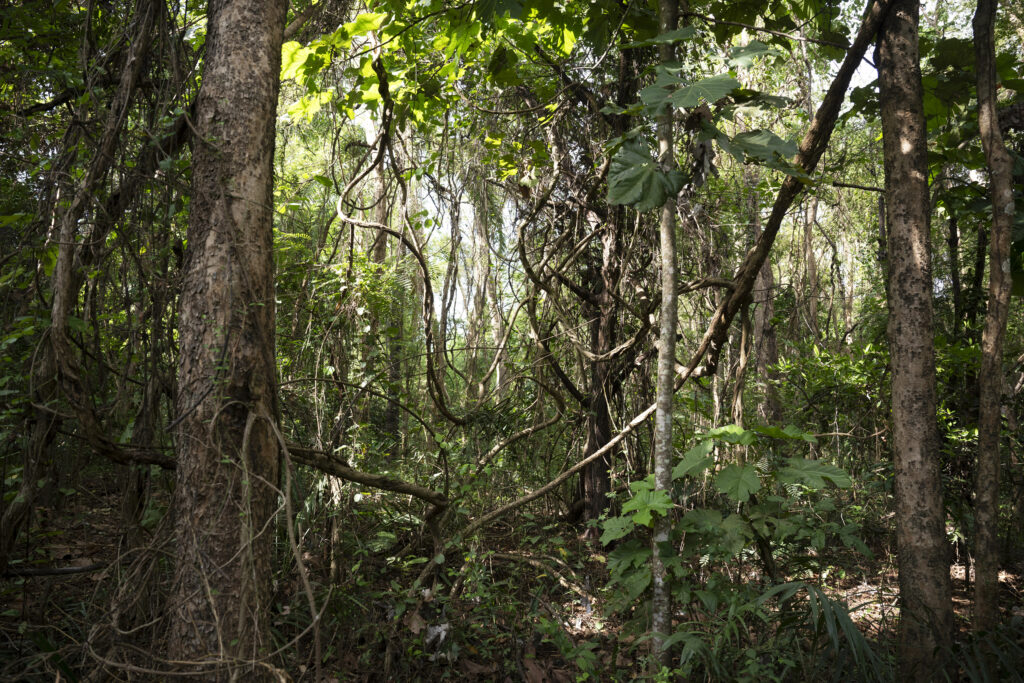
Our partner ODDB has alerted us to the presence of Colobes de Geoffroy (Colobus Vellerosus) in a small forest in west-central Benin, on the border with Togo. The forest of Kikélé fact 14 hectares. It is possibly the forest that is home to the most Geoffroy's Colobus at Benin, it would be 34. According to the International Union for Conservation of Nature (IUCN), this monkey is one of the world's most endangered species. 10 species of the world's most endangered primates. The world population is estimated at less than 1,000 individuals.
Project objectives
The origins of this population date back several centuries, when a dignitary settled in the area of Kikélé, from the Togo. He would have come with a couple of Geoffroy's Colobus. All present-day Colobus monkeys are thought to be descendants of this original pair. The Colobes are holy for the population of Kikélé and are considered as village guardians. Visit 2024, we have paid salaries from 5 eco-guards who deal with the protection of Colobes. We would like to securing salaries over the long term.

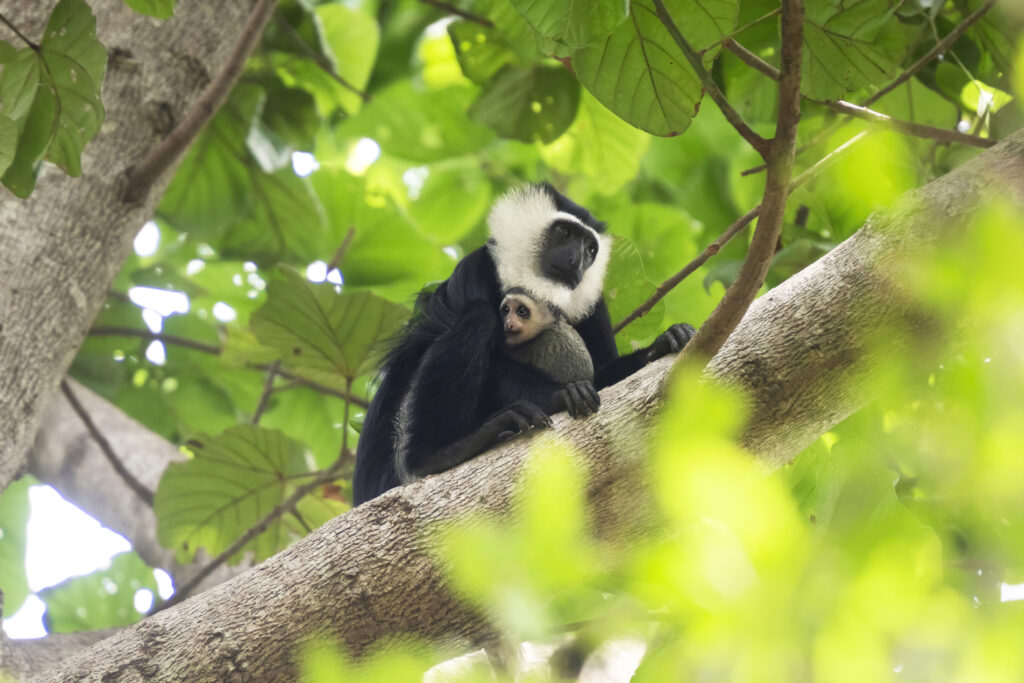
Geoffroy's Colobus (Colobus vellerosus)
Already completed
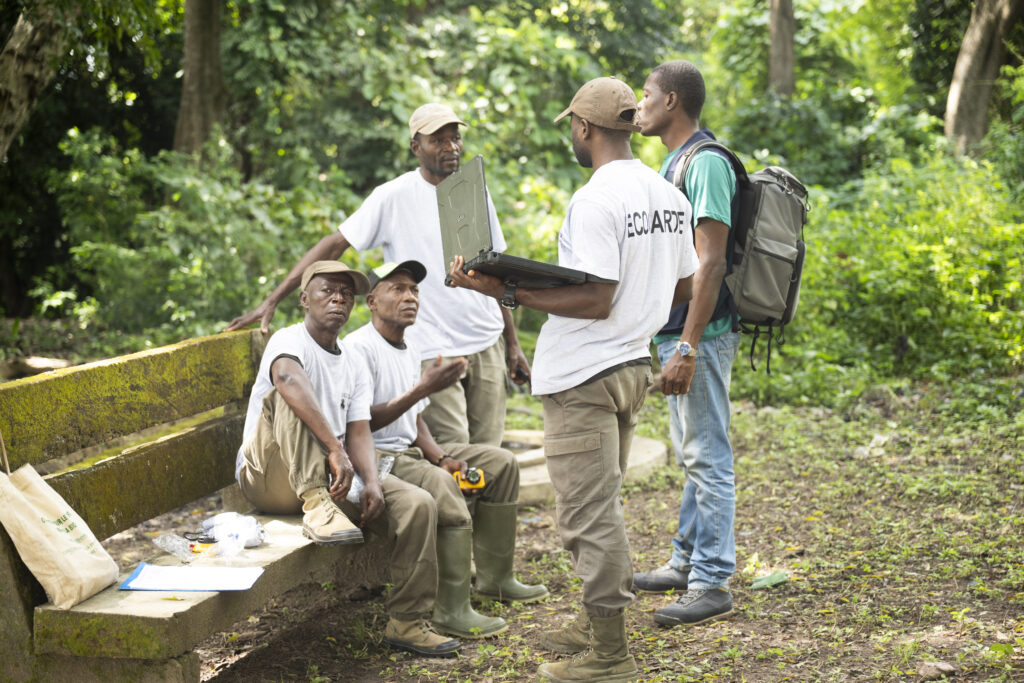
From 2024, HUMY finances salaries from 5 eco-guards to ensure the protection of Colobes. The sustainability of long-term salaries is planned.
Equipment and a motorbike were also provided to help the eco-guards travel to another forest a few kilometres away where Geoffroy's Colobus monkeys have been spotted. This second, larger forest is known locally as Okouta Kobounan, the mountain forest.
HUMY is also strengthening the presence of its partner ODDB by financing the salary of a person in charge of projects on site.
Beneficiaries
The direct beneficiaries of this project are 5 eco-guards who deal with the protection of Geoffroy's Colobus in Kikèlè. The entire Colobus population in the area is directly affected by this project, as are all the species living in the forest blocks where the patrols take place.
The indirect beneficiaries are the families of the ecoguards.
What happens next?
In the long term, we are looking into the possibility of recreating a biological corridor between the sacred forest of the village of Kikélé and the Okouta Kobounan forest in order to encourage genetic exchanges and avoid inbreeding among the Colobes.