

The local context
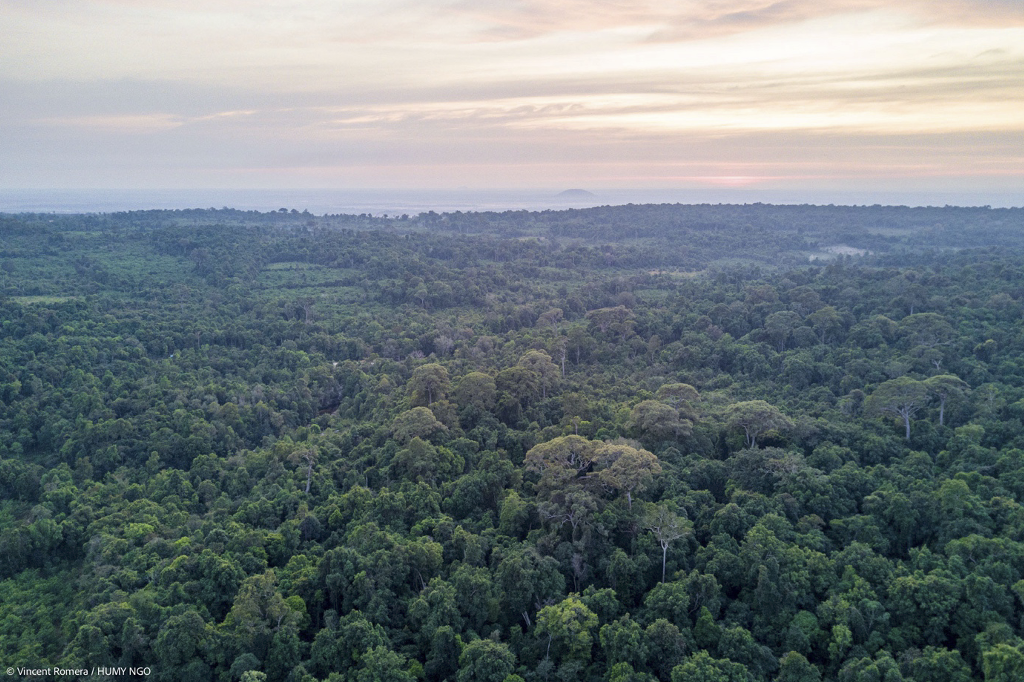
PNPK (Phnom Kulen National Park) is a green lung for Siem Reap province and a water tower supplying water to Siem Reap town and the tourism industry linked to the city of Angkor. In 2013, a vast campaign of naturalistic and scientific inventories was carried out, covering both the flora and fauna of the park. Since then, almost no inventories or studies have been carried out. In 2022-23, 10 years later, HUMY's ecologist carried out a large number of wildlife surveys in the area. The priority sectors were the Popel and Anlong Thom Community Protected Areas, where ADF Kulen and HUMY mainly work.
Project objectives
Updating naturalist data on the fauna of the national park.
Assess the conservation issues associated with species and natural habitats.
Participating in the development of a conservation strategy with the national park authorities and the CPAs.

Issues
The last major forest block in Siem Reap province (along with the forests of the Angkor complex), PNPK plays a vital role in the region through the ecosystem services it provides (notably the water cycle). In order to draw up a management plan and define priority areas for conservation, it was necessary to update our knowledge of the site's natural heritage. It was also an opportunity to ensure a presence in the forests, where illegal activities such as logging and poaching are still practised.
Already completed
After a 1-year mission to PNPK (Phnom Kulen National Park), much of the wildlife data was updated and a full report was written in collaboration with Jean-Baptiste Chevance (ADF Kulen) and Tony Yon, which was delivered personally to the Minister for the Environment. The list is impressive: 56 species of mammals, 209 species of birds, 61 species of reptiles, 25 species of amphibians, 183 species of butterflies, 430 species of moths and 95 species of dragonflies. Nearly thirty of these species have been assessed as threatened at global level. These include two primates: the Bonneted Gibbon and the Crab-eared Macaque, both listed as «endangered»; and the very rare Elongated Tortoise, considered «critically endangered».
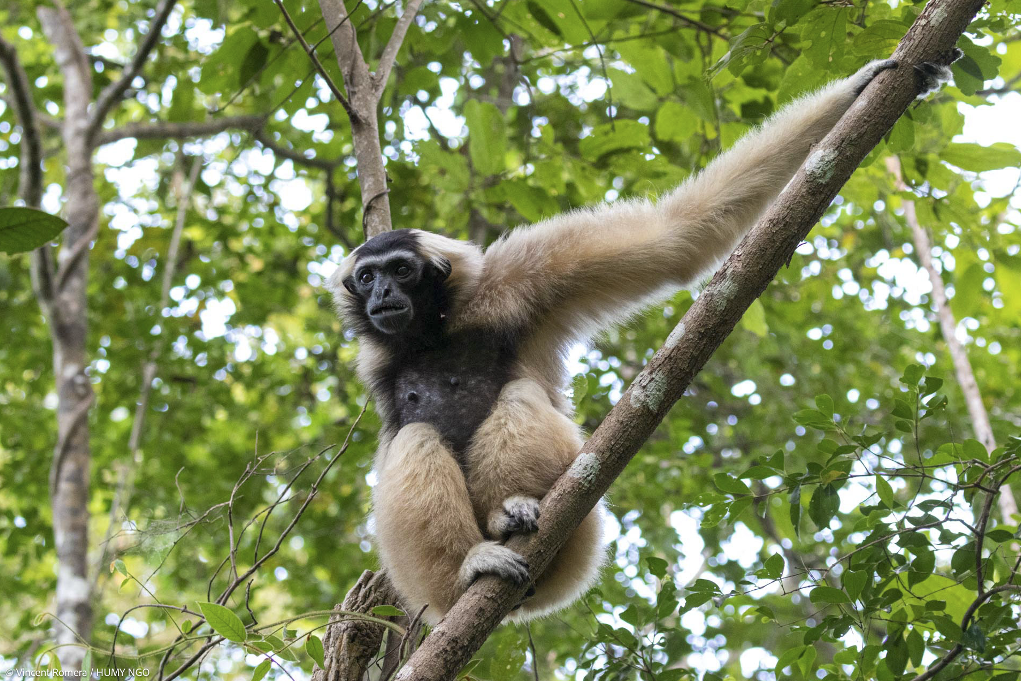
Bonneted gibbon (Hylobates pileatus)
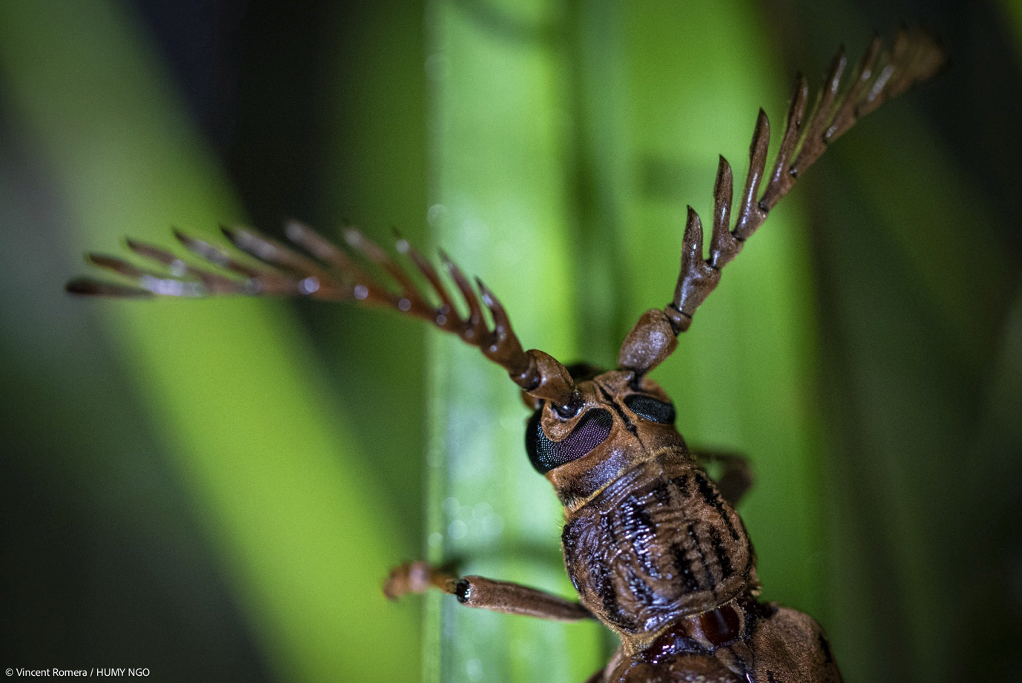
Lateropalus continentalis
Anecdote
Before the mission began, most of the naturalists and scientists contacted were fairly pessimistic, saying that the biodiversity of PNPK had plummeted and that «there was almost nothing left» in the park. After 1 year of investigations in the field, many rare species have been discovered there, as well as species observed for the first time in Cambodia! These include a bird (Song Warbler), two very rare beetles: Cerosterna luteopubescens and Lateropalus continentalis, a butterfly: Algia fasciata and dozens of species of moth!