

The local context
Against a backdrop of continuing loss of natural habitats and growing demand for «bushmeat», there is an urgent need to develop ex-situ conservation programmes for certain flagship species whose populations are falling. Due to heavy hunting pressure, habitat destruction and competition with livestock, certain species such as the Guib harnaché (antelope), the Dwarf Crocodile and the Kinixys de Home (tortoise) have almost disappeared, while others such as the Sitatunga (antelope) and the White-bellied Pangolin are on the brink of extinction.
Ex-situ conservation is unfortunately the last resort for saving certain animal populations from extinction. The main objective is to breed individuals in captivity in order to create a genetically viable population that can then be reintroduced into favourable natural environments. Animals from ex-situ conservation centres can be used to boost populations when a population is too low (lack of genetic mix, unbalanced sex ratio) or to help restore extinct populations (if the natural environment still allows).
Project objectives
Ex-situ conservation centres also have the advantage of being places where people can learn about the need to preserve ecosystems and species. They inform the public about the status of endangered species and the various threats they face.
The site will primarily serve as a reception and care centre for animals that have been injured or illegally trafficked, with the aim of reintroducing them into the wild in the Basse Vallée de l'Ouémé Biosphere Reserve (Man & Biosphere Reserve - UNESCO).
The project began with the acquisition of a 5-hectare piece of forest in addition to the 2 hectares already financed.

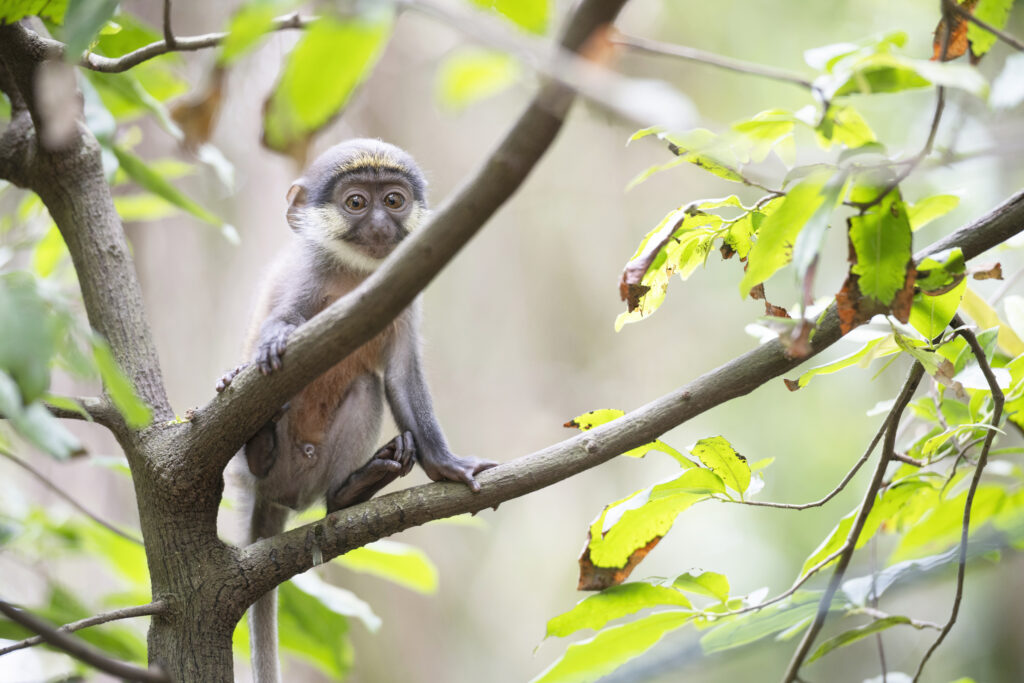
Red-bellied monkey (Cercopithecus erythrogaster erythrogaster)
The 7 hectares
No felling will be carried out for the structures dedicated to the project. A plantation of native species (trees and shrubs) is planned to create a natural fence for the area and to produce fodder for the species present on the site. There are also plans to use the centre as a tool for educating and raising awareness among communities and the general public.
The animals that will be temporarily present in the centre will come from judicial seizures, from other overcrowded centres or will be brought in by third parties who have recovered them in a distress situation. Under cover of the legal authorisations relating to the laws on the capture, transport and possession of protected species, and if the centre acquires all the legal certificates, individuals from strictly supervised scientific captures may be housed with the aim of reproducing certain key species.
In addition to its role in species conservation and environmental education, the centre could also be used to set up scientific research programmes linked to species conservation in Benin.
Site characteristics
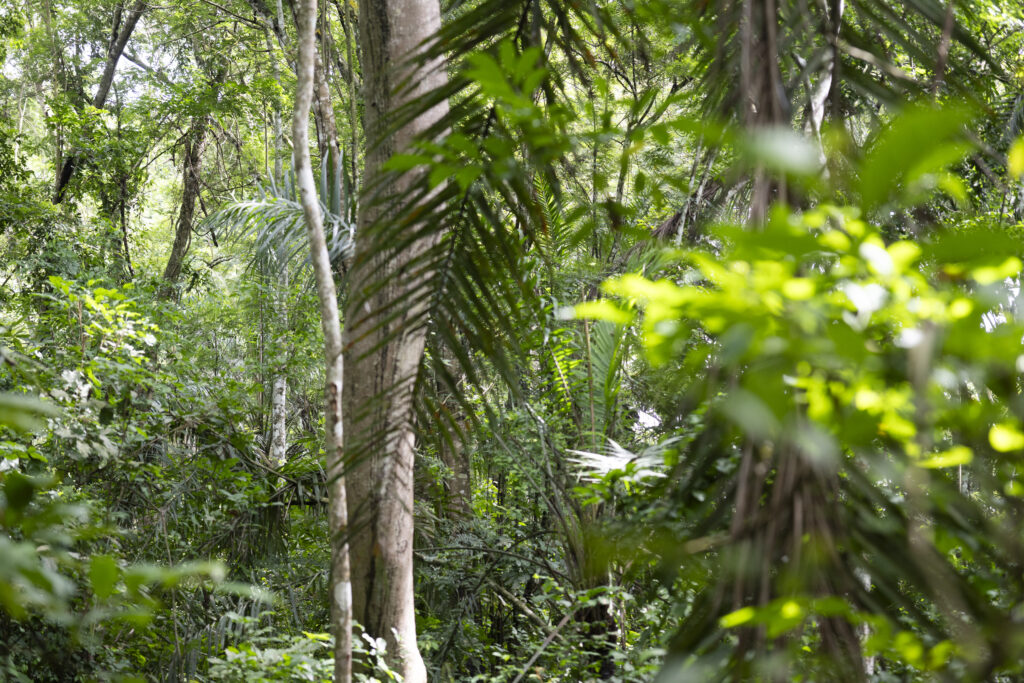
The site is a degraded forest formation located in the village of Vidjanavo, arrondissement of Dasso, commune of Ouinhi. The ecosystem is made up of patches of dense forest, forest galleries and marshy grasslands adjacent to an arm of the river, forming a mosaic of habitats and wetlands.
The fauna present in this ecosystem is characterised by the presence of several threatened mammals: Red-bellied monkey, Mone (primate), Red bushpig, Sitatunga, Harnessed guib, Tree daman, Large-spotted genet. The reptile species identified include Seba's Python, Nile Varan, Dwarf Crocodile, Black-necked Cobra and Forest Cobra.
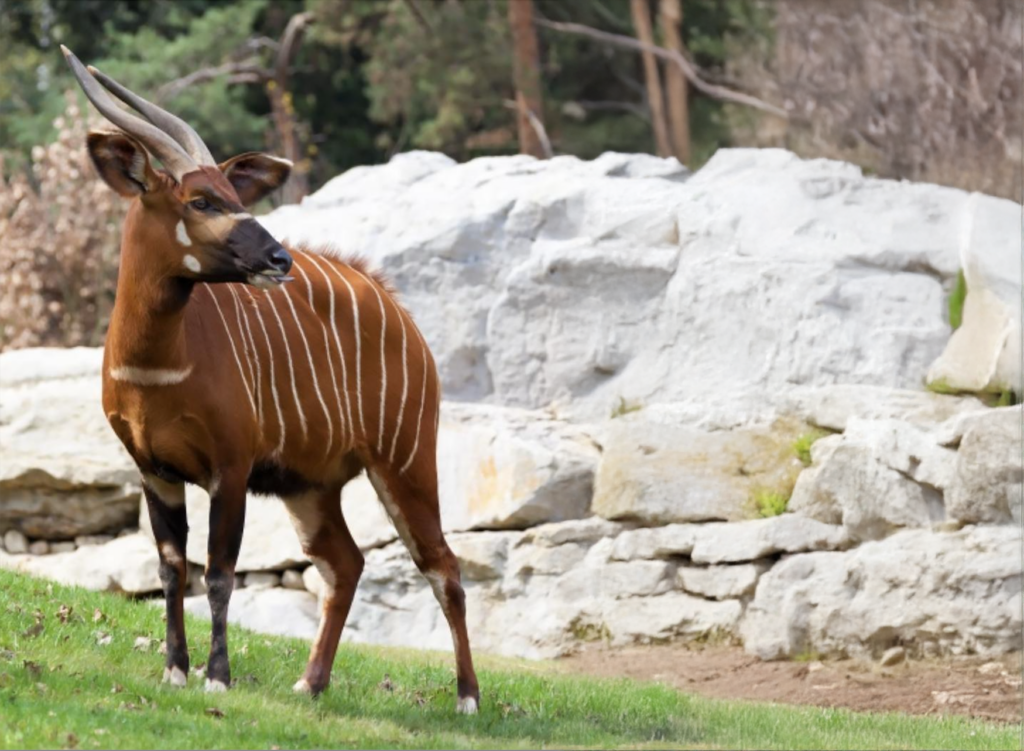
Sitatunga (Tragelaphus spekii)
Beneficiaries
The more forested area of the village, which is one of the areas put up for sale, has a surface area of around 7 ha. These 7 ha have already been secured by Humy and our local partner ODDB, by purchase from the owners in 2023 and 2024. The direct beneficiaries of this project are the endangered animal species in southern Benin located in the «Basse Vallée de l'Ouémé» Biosphere Reserve: the red-bellied monkey, Walter's duiker, Sitatunga, red bushpig, Home's Kinixys, etc.
The indirect beneficiaries of the project are the local population, particularly young people, children and women. The project is also expected to generate jobs for site maintenance and for the species in the future centre.