
The local context
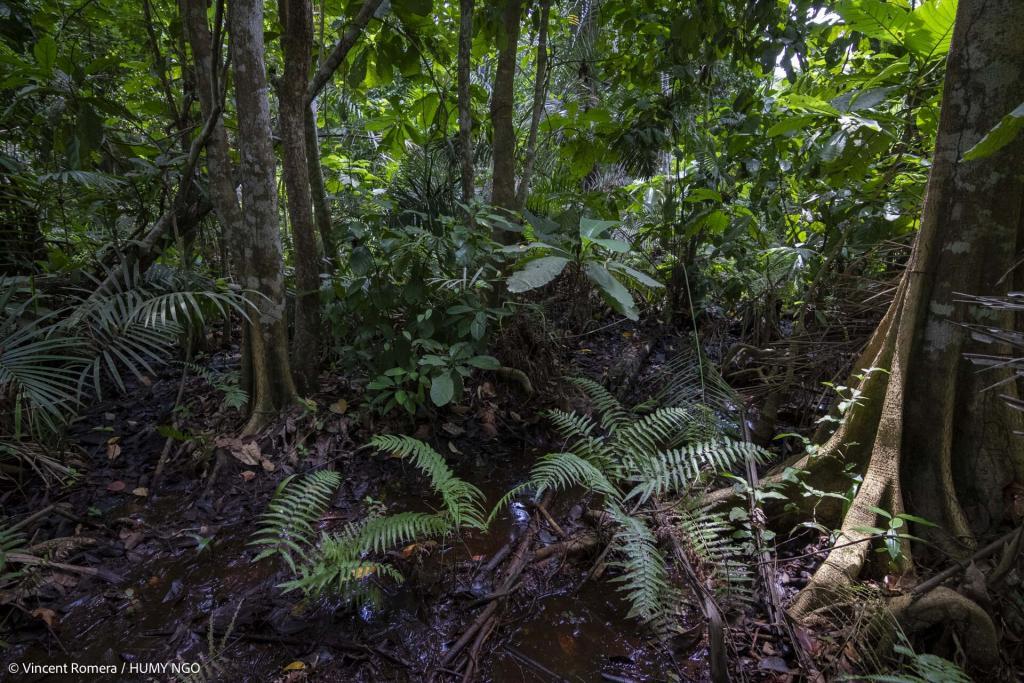
Hlanzoun is a swamp forest on peaty soil that is unique in West Africa due to certain tree species found there. It covers an area of 2,945 hectares, including a central core of almost 900 hectares in a relatively good state of conservation. This flooded forest is permanently fed by the river Hlan. However, Hlanzoun is a fragile ecosystem and is threatened by various human pressures. To the south of the forest lies a complex of wetlands with flooded and floating meadows, as well as Lake Hlan.

In 2021, Abdou Chérifou Ikoukomon (ECODEC) and Vincent Romera (HUMY) carried out wildlife surveys throughout the Hlanzoun area and its surroundings. They also used drones to map forest cover and deforestation areas.
Project objectives
Carry out inventories of the site's fauna.
Assess the state of forest cover and areas of deforestation.
Highlight the priority issues associated with the species.
Develop a conservation strategy for the site.
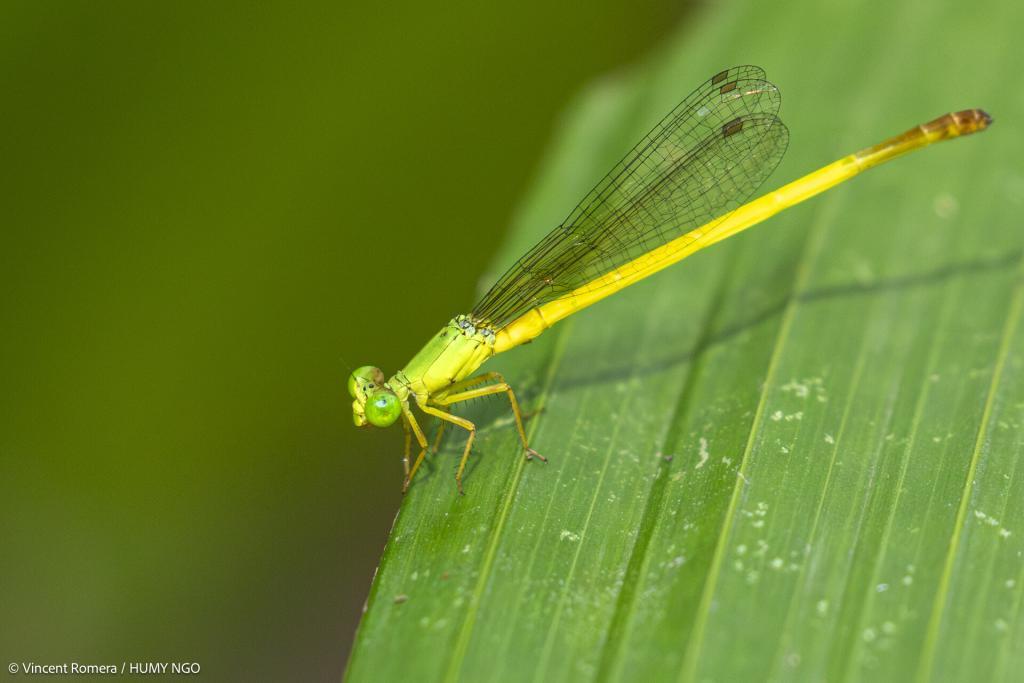
Lemon Agrion (Ceriagrion citrinum), male.
Issues
The Hlanzoun forest plays an important role in maintaining a favourable climate for farming in the region. In a context of severe drought, its transpiration generates mists every morning and contributes to local rainfall.
It is also a flood expansion zone for the river Hlan, which is a sub-tributary of the river Ouémé. Flooding in the lower Ouémé valley, particularly in the major urban centres of Cotonou and Abomey-Calavi (with a population of several million), is becoming increasingly regular and sometimes deadly. Conserving natural areas and especially wetlands located upstream in the river catchment helps to combat flooding downstream.
Hlanzoun is also a swamp forest on peaty soil. Tropical forests on peat soils are among the terrestrial ecosystems that sequester the most carbon on Earth, and their conservation must be a priority in the fight against climate change.
Inventory results in 2021
The fauna at Hlanzou is rich and diverse, with (data from the 2021 inventories + bibliographical data) verified): 41 mammal species (including 7 primates and 15 bats), 195 bird species, 27 reptiles, 16 amphibians, 51 fish, 58 dragonflies and 227 butterflies. Of these animal species, 12 are globally threatened, and a total of 54 are considered threatened in Benin. It should be noted that two species of fish are endemic to the River Hlan and that one dragonfly, the Lemon Agrion (ceriagrion citrinum), is endemic to Hlanzoun and a few rare forests in southern Benin and south-western Nigeria. As far as mammals are concerned, the flagship species is the red-bellied monkey (Cercopithecus erythrogaster erythrogaster), which is globally considered to be critically endangered and virtually endemic in Benin.
The inventories carried out by HUMY/ECODEC listed 58 species of odonates (dragonflies), making it one of the most important sites in West Africa for this group of species.
6 species of odonata had never been seen before in the country.
The flora is made up of 241 recorded plant species, 8 of which are near-threatened or vulnerable at global level. In Benin, 27 of these species are threatened.
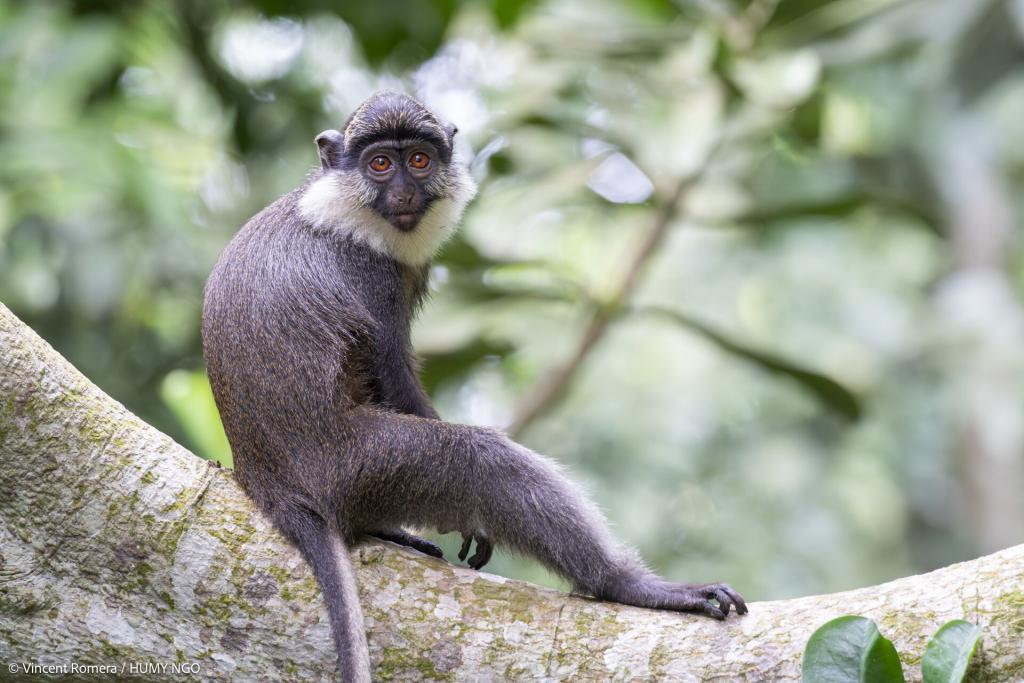
Red-bellied monkey (Cercopithecus erythrogaster erythrogaster), female.
A success...
If HUMY and ECODEC If no action had been taken in 2021 in the Hlanzoun forest, it would have been almost completely destroyed! In fact, a project to drain the swampy forest on peaty soil had been initiated by a local conservation NGO with the help of European funding! A total heresy since, as explained above, this type of tropical peat bog is listed as one of the world's critical ecosystems and stores phenomenal quantities of carbon. It was only after a bitter struggle and the mobilisation of the Beninese scientific community that this devastating action was halted in the course of 2021.