

The local context
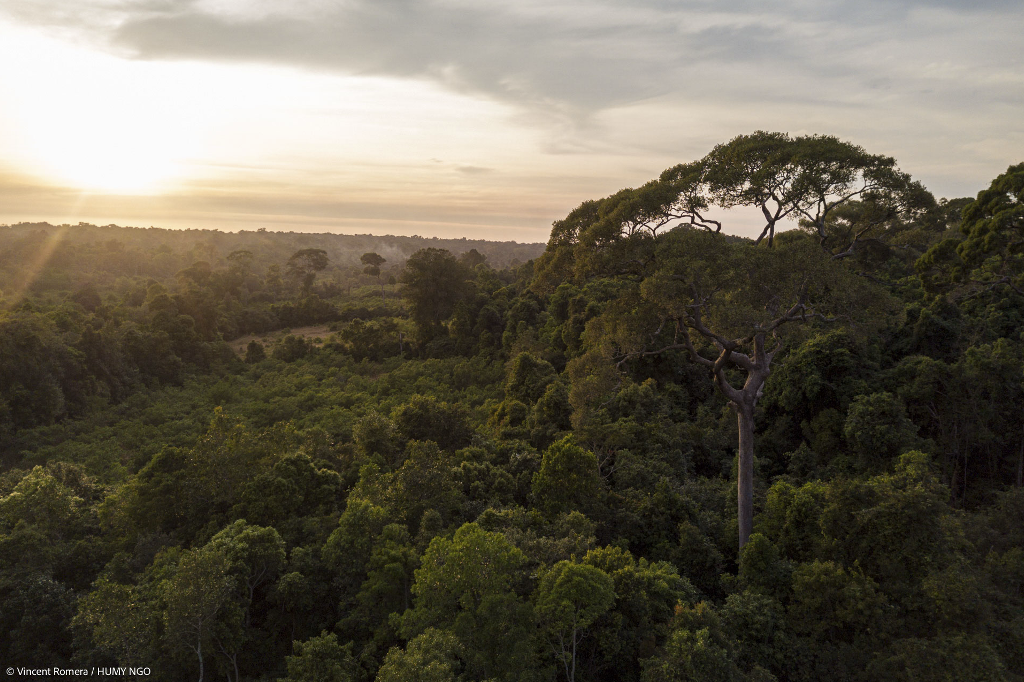
Le Phnom Kulen has long been a low-lying, landlocked plateau. Once made up of impenetrable primary forests, in the past the area was systematically felled for «precious woods» and timber, and was subject to heavy poaching pressure. More recently, the development of cashew nut cultivation has accelerated deforestation throughout the eastern part of the national park. Although natural habitats have been disturbed over most of the area, the surveys carried out by HUMY in 2022-23 show that there is still a high diversity of species, including rare and endangered species such as the Bonneted Gibbon. The different types of forest found in the park, from evergreen rainforest to tropical dry forest, form a veritable mosaic of natural habitats.
Project objectives
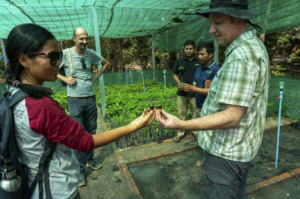
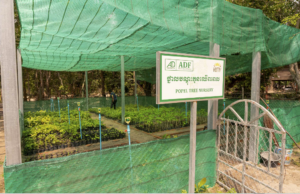
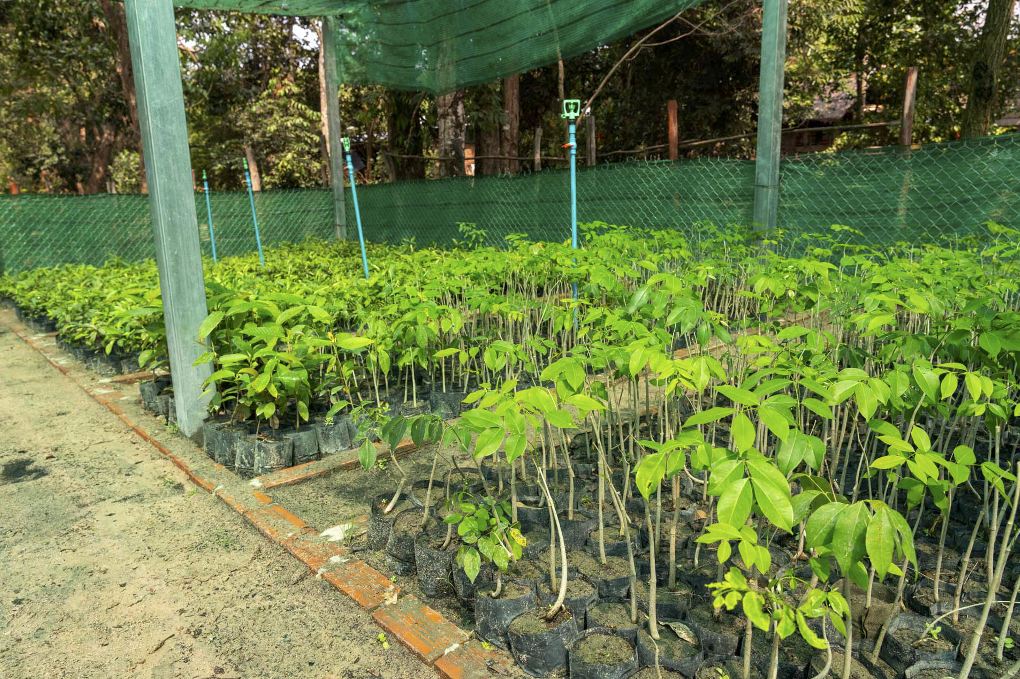
The aim is to contribute to the reforestation of the national park, but also and above all, to raise awareness of environmental issues among the younger generation. The school nursery project provides an opportunity to talk to pupils about reforestation issues, and they are also involved in all stages of tree production, from sowing to planting. The income generated by the nursery helps to improve the teachers' incomes and to purchase equipment for the school and nursery.
Issues
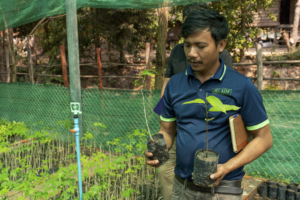
With an annual production capacity of around 5,000 seedlings, this nursery (and the others in the ADF Kulen network) contributes to local reforestation. The species propagated are all indigenous to the area and the seeds come from local forests. Several of them are threatened, such as the Beng (Afzelia xylocarpa), a tree classified as globally «endangered» by the IUCN, or the Neang Nuon (Dalbergia bariensis) assessed as «critically endangered». Participating in the restoration of ecosystems, by improving teachers' incomes and the school's equipment, is an inspiring activity for the pupils. It is they who will have to protect the forests in the future in order to safeguard their resources. Some of the trees are planted in the national park in agreement with the authorities, and the rest are sold.
Already completed
Between 2023 and 2025, more than 8,800 trees from the Popel school nursery will be planted in Phnom Kulen National Park.