

The local context
The Gnanhouizounmè forest, in the commune of Bonou, is one of the few remaining dense forest ecosystems in southern Benin's Dahomey-Gap region. Located in a vast mosaic of wetlands in the lower valley of the River Ouémé, this area is important for the following reasons for the conservation of biodiversity.
Project objectives
Preserving the Gnanhouizounmè community forest and its exceptional wildlife involves setting up and supporting income-generating activities for the villagers.

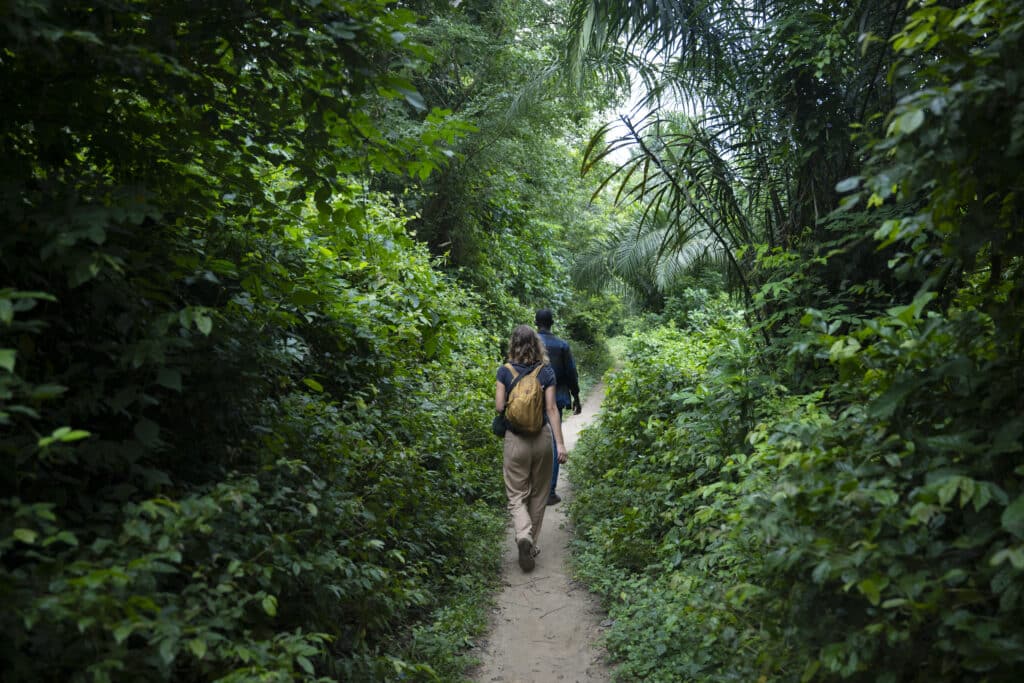
Preserving a forest and its wildlife
In the Ouémé valley, this forest is one of the last sanctuaries of the red-bellied monkey (Cercopithecus e. erythrogaster), a primate endemic to the Dahomey Gap. Covering 127 hectares, this forest is included in the RAMSAR 1018 « East Benin Wetlands Complex ». (RAMSAR is an international label designating sites as being of international importance for the conservation of migratory waterbirds)
Species in danger of extinction
It is also the refuge habitat of the Sitatunga (Tragelaphus spekii), the largest antelope in the southern part of Benin, which is under national threat. Studies have revealed the presence of 8 species of mammal, including 5 species and subspecies of primate, as well as 3 species of reptile.
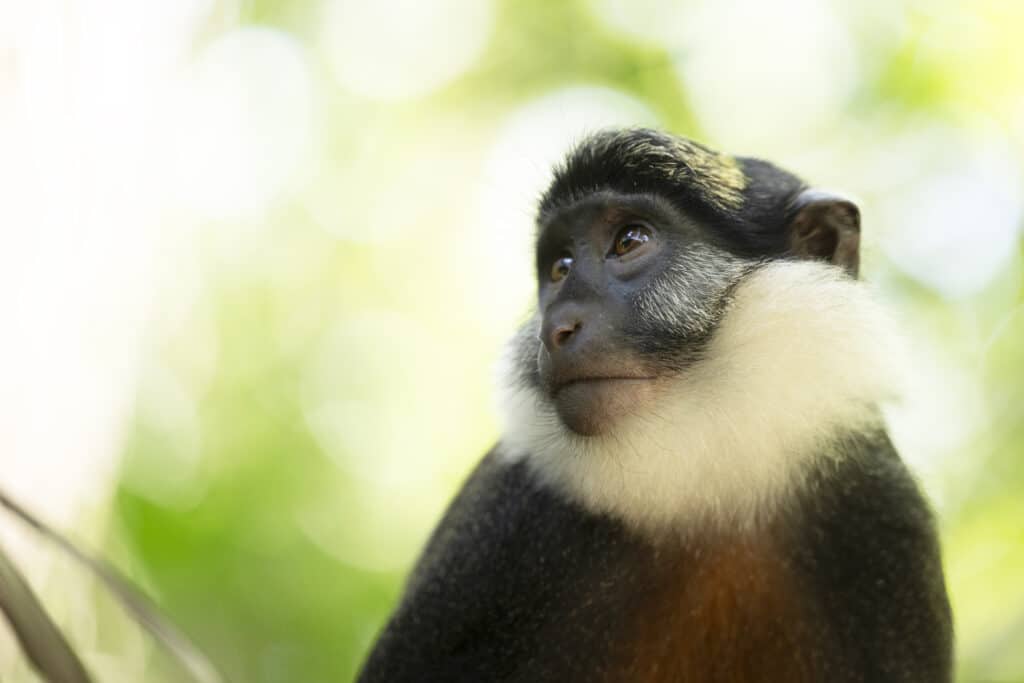
Red-bellied monkey (Cercopithecus e. erythrogaster)

Income-generating activities
Humy is helping its partner ODDB to set up a microcredit fund for women in the communes of Adjohoun and Bonou.
Training in catering and service is being funded for young people who will be able to run a tourist restaurant in Gnanhouizounmè.