

The local context
Sulawesi is an integral part of the so-called «Wallacea» biodiversity hotspot, with some of the highest rates of endemicity in the world (98% of Sulawesi's non-flying mammals are endemic) and some particularly threatened species. A large number of animal and plant species are still unknown to science, and the region also boasts archaeological sites of international importance. After decades of deforestation for industrial oil palm plantations, the island has now fallen victim to the rapid proliferation of nickel mines and refining complexes. Hundreds of thousands of hectares are affected in the province of Sulawesi Tenggara alone!
Project objectives
Improving knowledge of the biodiversity of the karstic massifs of Sulawesi Tenggara, carrying out archaeological surveys, studying the hydrological functioning of the massifs.
Demonstrate the major importance of protecting the region's forests and ecosystems on a sustainable basis in the face of a booming mining industry.
Save forests recognised worldwide as «irreplaceable biodiversity» from total destruction by creating a protected area (such as a national park or geopark).

Issues
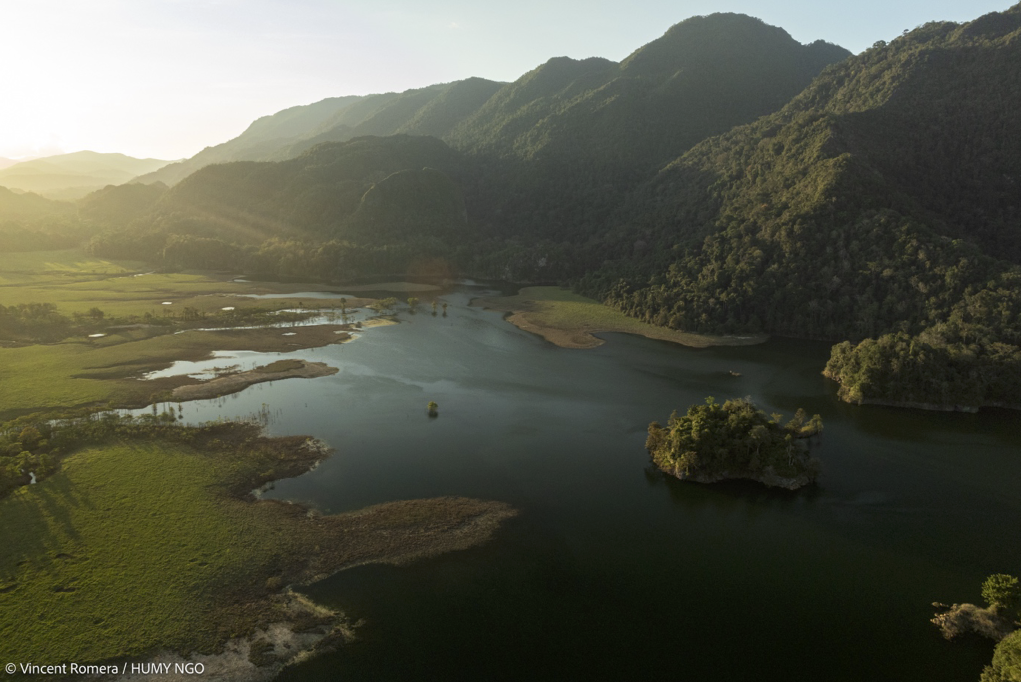
The areas targeted by the project have never been prospected by scientists, so the potential for discovering new species or archaeological sites is particularly high. A request to classify an area as a protected area must be supported and justified by scientific inventories. In 2024, HUMY supported the Naturevolution Indonesia teams in preparing and setting up scientific expeditions, making progress on the mapping of the project, carrying out the first inventories of the terrestrial fauna, etc. The first expedition to the Hiuka temporary lake region was carried out with a small team of scientists (2 archaeologists, 2 anthropologists, 1 specialist in aquatic organisms, 1 wildlife specialist and the HUMY ecologist). The results exceeded all expectations as far as the fauna was concerned, with even potential new species for science!
First results
Extensive mapping work was carried out during the 2024 mission, considerably facilitating Naturevolution's application to create a protected area.
At Hiuka, the first fauna inventories show that almost 300 animal species have been recorded. Of these, 30 species represent conservation issues due to their IUCN conservation status or national protection status, a potential new species of frog (Oreophryne sp.) and a new species of fish.
Note that a family of Plains Anoas (Bubalus depressicornis) consisting of a female, a male and a youngster was observed and photographed. This is an exceptional observation, as it is very rare to be able to see this species directly. Zoo or camera-trap images are often used to illustrate the species.
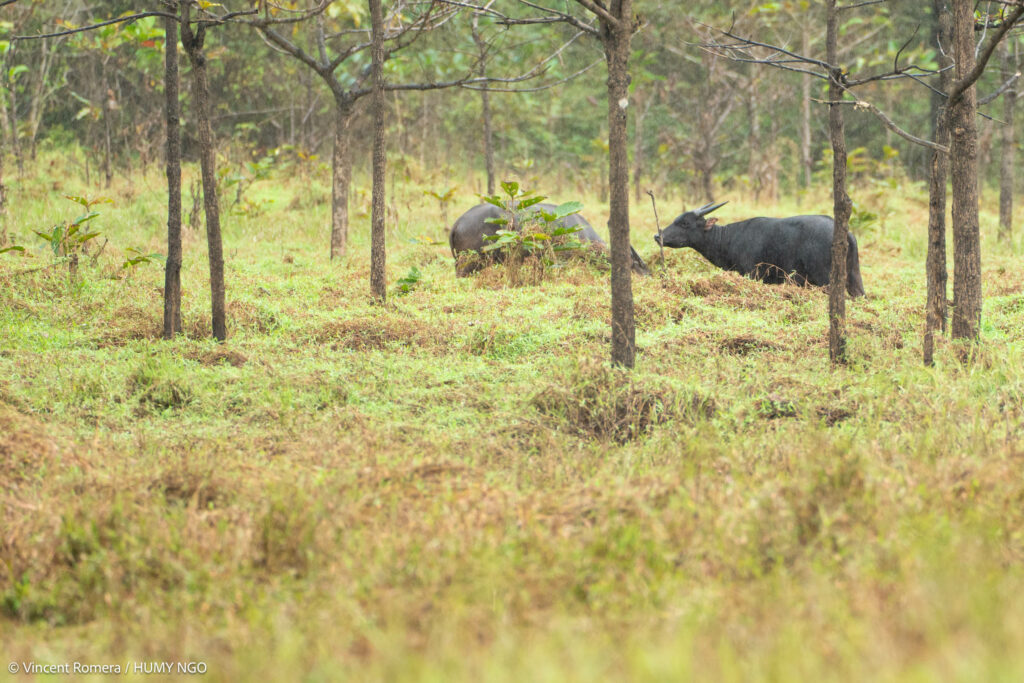
Plains Anoan (Bubalus depressicornis)
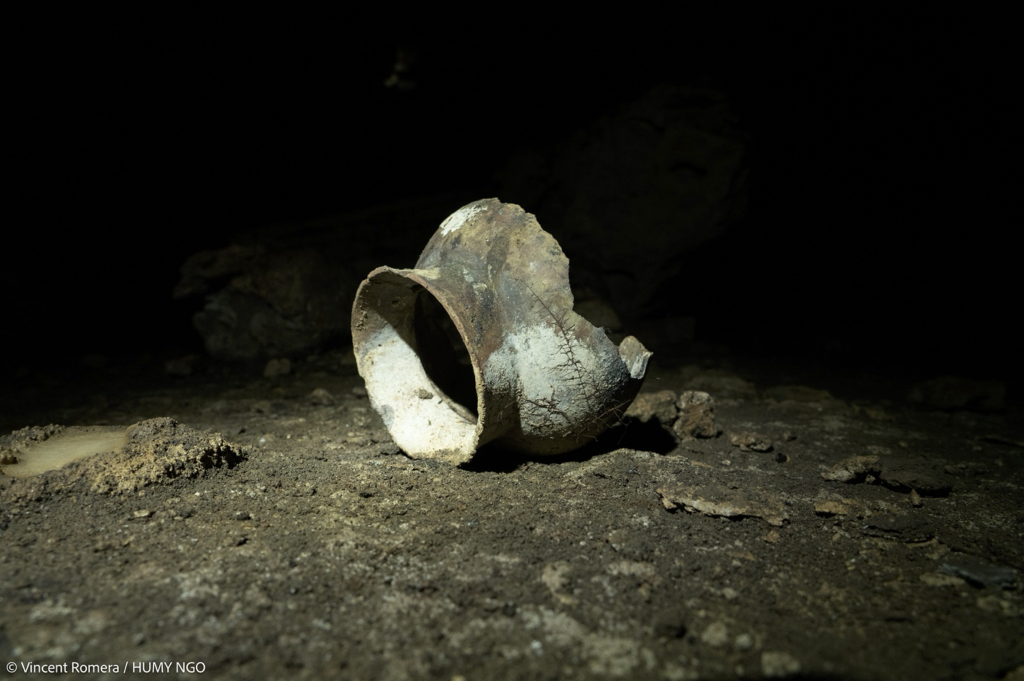
Several caves containing Austronesian ceramics have also been discovered.
All these results have been recorded in a report and also presented at the 5th Asian Trans-Disciplinary Karst Conference 2024 in Yogyakarta (Indonesia).